
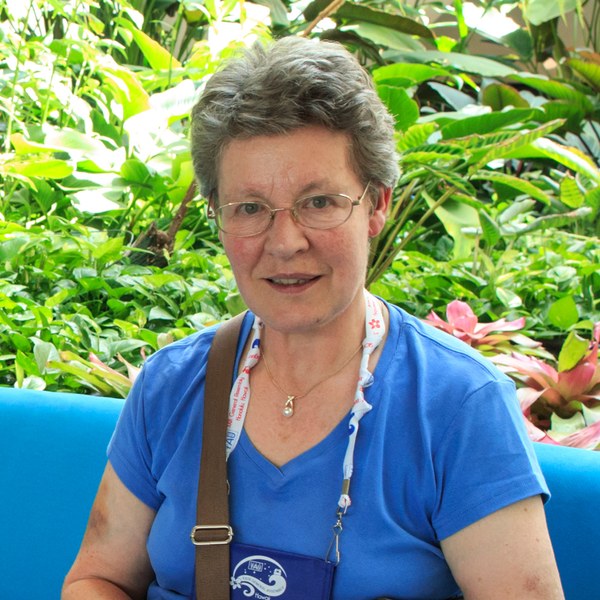
Photo: IAU/B. Tafreshi (twanight.org), CC BY 4.0, Wikimedia Commons
Jocelyn Bell Burnell
University of Oxford
- Research field
- Radio astronomy, pulsars and neutron stars
As a graduate student in Cambridge in 1967, Jocelyn Bell Burnell found the first pulsar in the paper charts of a radio telescope she had helped to build, and then three more. The regular pulses turned out to come from rotating neutron stars, objects that had been predicted in 1934 and never seen. She is now a visiting academic in astrophysics at the University of Oxford and Professorial Fellow in Physics at Mansfield College. The unit follows her own account of the discovery and uses it to show why only a neutron star can spin that fast.
In the masterclass
Section 3.2 on pulsars: the research spotlight retells her account of the discovery, right after the argument that only a neutron star can rotate so fast.
The research is presented in Unit 10: White Dwarfs, Neutron Stars and Black Holes, in a research spotlight box that explains the result at the level of the unit and links it to the physics you have just learned.
The paper
Little Green Men, White Dwarfs or Pulsars?