 Image: fish socks / Pexels
Dark matter and how astronomers know it is there
Dark matter is one of the clearest examples in astronomy where the evidence came first and the explanation came later. Astronomers do not see dark matter shining, absorbing light, or reflecting it. They infer it from gravity. The case is built from several independent lines of evidence, and each points to the same conclusion: there is more mass in the universe than the visible stuff can account for.
Galaxy rotation curves
In a normal solar system, planets farther from the Sun move more slowly. Gravity weakens with distance, so orbital speed drops. Astronomers expected something similar for stars in the outer parts of spiral galaxies. If most of a galaxy's mass were in the bright central region, stars far from the centre should orbit more slowly than stars nearby.
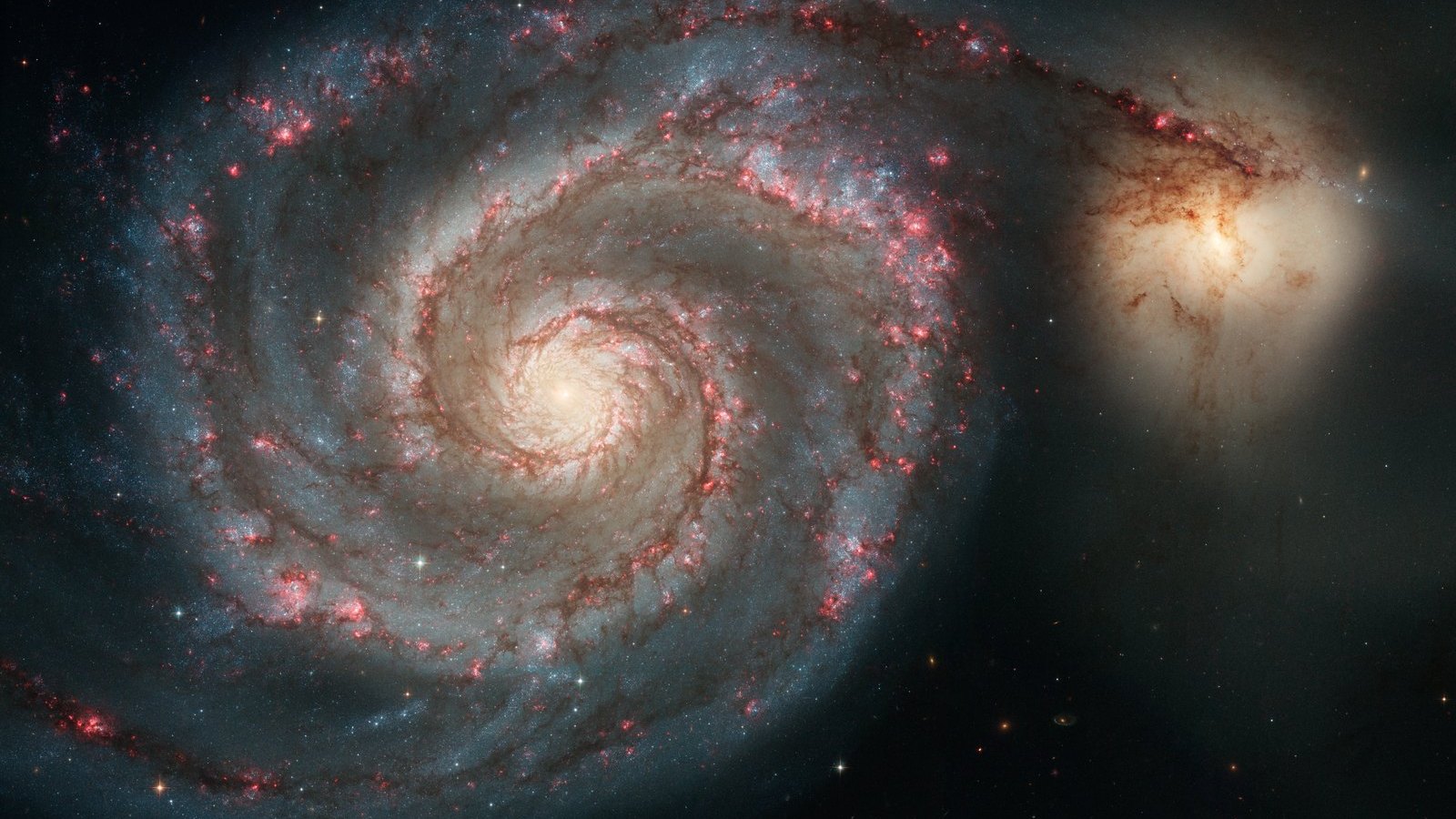
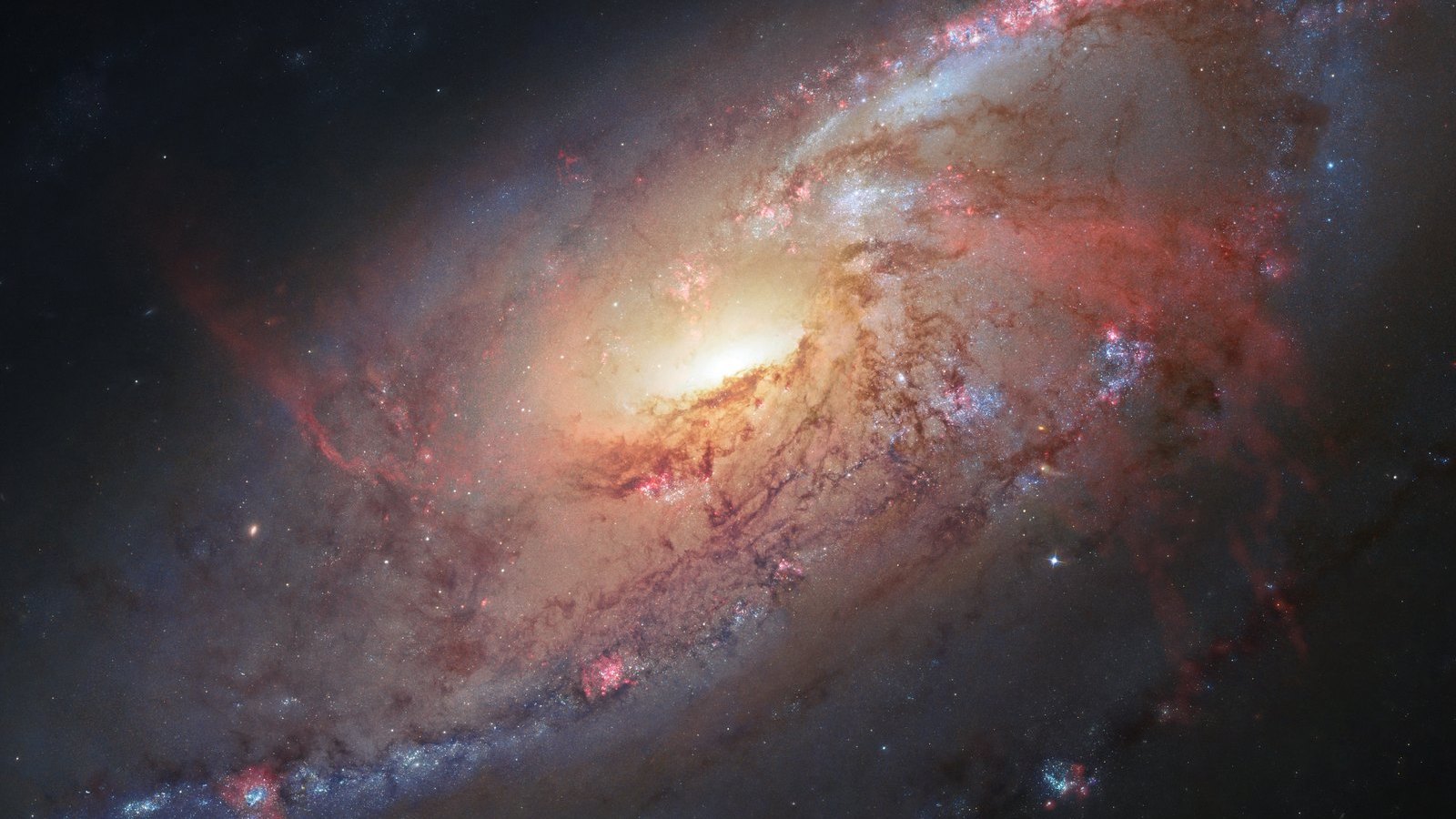
That is not what is seen. In the 1970s, Vera Rubin and Kent Ford measured rotation curves for spiral galaxies and found that the orbital speeds stay roughly flat far beyond the bright disk. A star at the edge of a large spiral galaxy can move at about 200 km/s or more, even where the starlight has faded a great deal. If you add up only the stars, gas, and dust that astronomers can detect, the gravity is too weak to keep those outer stars moving that fast.
The simplest way to explain a flat rotation curve is to place the galaxy inside a much larger halo of unseen matter. That halo must extend well beyond the visible disk. The visible galaxy is only the bright part in the middle. The dark halo holds most of the mass.
This idea does not depend on one galaxy. Spiral galaxies of many sizes show the same basic pattern. The numbers change from system to system, but the mismatch between visible mass and measured speed keeps appearing. That repetition matters. It means the effect is not a quirk of one object or one telescope.
Gravitational lensing shows extra mass
Gravity bends light. Albert Einstein's general relativity predicts this, and astronomers observe it in many places. When a massive object lies between us and a distant source, the light can be deflected and distorted. In strong cases, one source can appear as arcs or even multiple images. In weaker cases, the shapes of background galaxies are stretched by a tiny amount. This is called gravitational lensing.
Lensing is useful because it measures mass in a direct way. Light does not care whether the mass is made of stars, gas, or something invisible. If the lensing signal is stronger than the visible matter can explain, then there must be extra mass along the line of sight.
A famous example is the galaxy cluster Abell 1689, which shows strong lensing arcs. Clusters are especially important because they contain hundreds or thousands of galaxies, hot gas that glows in X rays, and a lot of unseen mass. When astronomers map the lensing pattern, they find that most of the mass is not where most of the light is. The X ray gas carries a lot of ordinary matter, yet even that is not enough. The mass map still shows a much larger dark component.
Lensing also works on larger scales through weak lensing surveys. By measuring tiny shape distortions in large numbers of background galaxies, astronomers can trace how mass is distributed across parts of the universe. These surveys again find more mass than the luminous matter can provide.
The Bullet Cluster and why it matters
The Bullet Cluster, 1E 0657-56, is one of the strongest pieces of evidence for dark matter. It is actually a pair of galaxy clusters that have passed through each other. The event happened about 150 million years ago, which is short on cosmic timescales. The name comes from the hot gas of one cluster moving through the other like a bullet through a target.
This system is useful because its different ingredients behave differently during the collision. The galaxies mostly pass through each other with little direct interaction. The hot gas, which makes up a large part of the ordinary matter in a cluster, slows down and piles up in the middle. X ray observations show that gas clearly. Lensing maps show something else. The peaks of the gravitational mass lie near the galaxies, not near the gas.
That matters because it means most of the gravitating matter did not get slowed by the collision. If the extra gravity came only from ordinary matter in the gas, the lensing signal would line up with the gas. It does not. The clean separation between the hot gas and the mass peaks is hard to explain without dark matter.
The Bullet Cluster is not the only merging cluster with this pattern, but it became famous because the evidence is especially clear. It shows that the unseen mass is not just a bookkeeping error in the light. Something with mass is there, and it behaves differently from normal gas.
What dark matter is not
Dark matter is dark because it does not interact with light in the usual way. That is the point. It cannot be ordinary stars, planets, or clouds of dust. We would see those. It also cannot be most of the cold gas in galaxies and clusters, because radio, infrared, and X ray observations already account for that ordinary matter.
Dark matter is also not the same as dark energy. Dark energy is the name for the process behind the accelerated expansion of the universe. Dark matter clusters around galaxies and helps hold structures together. Dark energy is spread much more smoothly through space and affects the expansion of the universe on the largest scales. They are different parts of the cosmic budget.
A useful number is the current cosmic matter budget from standard cosmology. Ordinary matter makes up about 5 percent of the energy content of the universe, dark matter about 27 percent, and dark energy about 68 percent. Those numbers come from combining several kinds of observations, including the cosmic microwave background, galaxy clustering, and supernova data.
What we still do not know
Dark matter is known by its gravity, but its identity is still unknown. We do not know what particle, if any, makes it up. We do not know whether it is one particle or several. We do not know how strongly it interacts with normal matter beyond gravity, if at all.
There are several leading ideas. One is weakly interacting massive particles, often called WIMPs. Another is axions, very light particles first proposed in a different context in particle physics. There are other ideas too, including sterile neutrinos in some models. None has been confirmed.
Astronomers and physicists search for dark matter in three main ways. Direct detection experiments look for rare hits in deep underground detectors. Indirect searches look for radiation that might come from dark matter particles destroying each other or decaying. Collider experiments, such as those at the Large Hadron Collider, try to make dark matter in high energy collisions. So far, these searches have not produced a clear discovery.
There are also modified gravity ideas that try to explain galaxy rotation without dark matter. These ideas can fit some data in some cases, but they struggle to explain the full set of observations at once, especially galaxy clusters, lensing maps, and the Bullet Cluster. That is why dark matter remains the standard explanation.
The good news is that the evidence is not fragile. Rotation curves, lensing, and cluster collisions point in the same direction, even though they come from different methods and different parts of astronomy. The bad news is that we still do not know what the missing mass is made of. That is a real open problem, and it sits at the boundary between astrophysics and particle physics.
If you want to see how astronomers build this kind of argument from data, the curriculum shows the core topics used across the masterclass.